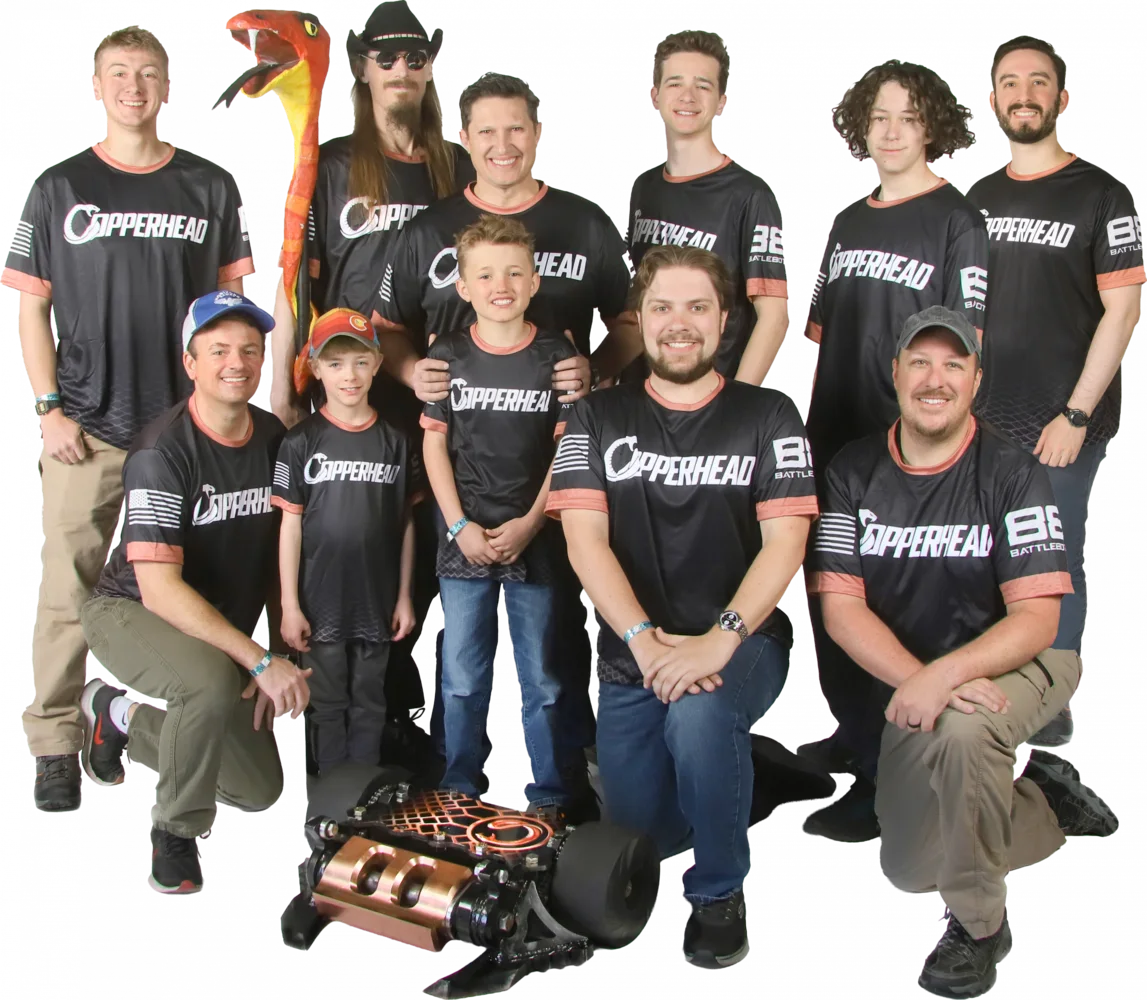
BattleBots Pro League Format Decoded: Why Group Stages Change Pit Strategy
The 24-robot Pro League puts repeated fights before knockout rounds. Learn why scheduling, repairs and opponent-specific configurations matter as much as one big hit.
By Riley Cross · September 28, 2026 · 3 min read · combat-robotics
BattleBots Pro League changes the way a viewer should assess a contender. A spectacular weapon is important, but so are the robot's ability to complete repeated fights and the team's ability to restore it between appearances.
The official league page describes 24 robots, a group-stage format leading into final knockout rounds, and a 20-part season released on the BattleBots YouTube channel. It identifies Bright Data as the series' ultimate sponsor.
Our BattleBots heavyweight analysis introduces several established design approaches. The Pro League's group structure makes their durability and serviceability especially relevant.
Group stages change the risk calculation
In a single-elimination contest, one loss ends a run. A group stage creates a different optimisation problem: each match contributes to qualification, while the damage from one fight can influence the next.
That does not mean a team should avoid aggression. It means the value of a risky exchange depends on the likely match result, repair burden and remaining schedule.
A configuration that maximises one favourable matchup may not be the best choice for a sequence of different opponents. Teams must balance offence, mobility and protection across that sequence.
Do not invent a points system
Tournament analysis needs the actual competition rules. A knockout, judges' decision, tie-break and withdrawal may be treated differently across leagues or seasons.
The public Pro League overview confirms the broad format, but it is not a complete scoring handbook. It would be misleading to attach a football-style three-point system or a supposed knockout bonus without the relevant official rule.
Fans comparing teams should track recorded outcomes first and use the organiser's published qualification criteria when available.
Modular protection is only useful if it is serviceable
Changing forks, wedges or outer protection can adapt a machine to a particular opponent. But every configuration adds checking, fastening and handling work.
A good modular system has repeatable attachment points and a clear inspection procedure. The team needs to know that the replacement is secure and within the permitted configuration, not merely that it fits.
Repair access also matters. A high-performance component buried behind several layers may cost more turnaround time than a slightly less compact arrangement that is easy to inspect.
The pit is part of the competitive system
Between fights, teams must distinguish cosmetic damage from a fault that affects movement, weapon operation or safety. A checklist can prevent the most visible broken part from distracting attention from a damaged connector or bearing.
Temperature, voltage and controller logs can improve the inspection, provided the data is interpreted correctly. A reading taken after the robot has cooled is not the same as a temperature measured during the fight.
Useful records include the installed configuration, component replacements and the checks completed before returning to the arena.
A viewer's guide to repeat-fight performance
- Does the robot retain controlled mobility after exchanges?
- Can the team replace likely wear items quickly?
- Does its configuration change coherently for different opponents?
- Are repeated failures traced to the same subsystem?
- Does its later performance show the consequences of earlier damage?
These questions reveal more than counting dramatic launches or sparks. Group-stage combat makes the entire programme visible: machine, driver and maintenance process.
Reporting basis
The robot count, distribution schedule and broad competition format are taken from the official BattleBots Pro League page. The tactical discussion is analysis, not an unpublished points table or a prediction of the championship result.
Cover photograph: Copperhead team and robot, BattleBots Pro League 2026.