Inside the Drone Racing League: How Professional FPV Racing Actually Works
The Drone Racing League is the closest thing to a sanctioned professional FPV sport. Here is what sets it apart from club racing, and why the speeds involved are difficult to comprehend until you see them in person.
By Sam Nakamura · June 10, 2024 · 4 min read · fpv-racing
The Drone Racing League was founded in 2015 with a simple, slightly audacious premise: take something people were already doing in parking lots and backyards, put it in a TV-friendly format, and build a professional sport around it. Nearly a decade later, the DRL is the dominant name in professional FPV racing, with events staged in venues ranging from decommissioned power stations to NFL stadiums.
Understanding what makes professional DRL racing different from the club racing most FPV pilots know requires starting with the hardware.
The DRL Spec Drone
The DRL does not let pilots fly whatever they want. All competitors race the same drone — the DRL Racer — which the league designs, manufactures, and provides to every pilot. This is a deliberate decision that keeps the competition about pilot skill rather than engineering budget.
The current spec drone is not a consumer product. It weighs around 800 grams, uses a purpose-built 4-in-1 ESC board, and is built to survive impacts that would destroy most freestyle setups. DRL estimates that a full season of racing destroys several drones per pilot — the crashes at professional speeds are genuinely violent.
The drone flies at speeds exceeding 90 mph in competition. On some courses, with a long straight, pilots have been clocked above 120 mph.
How Pilots Actually Race
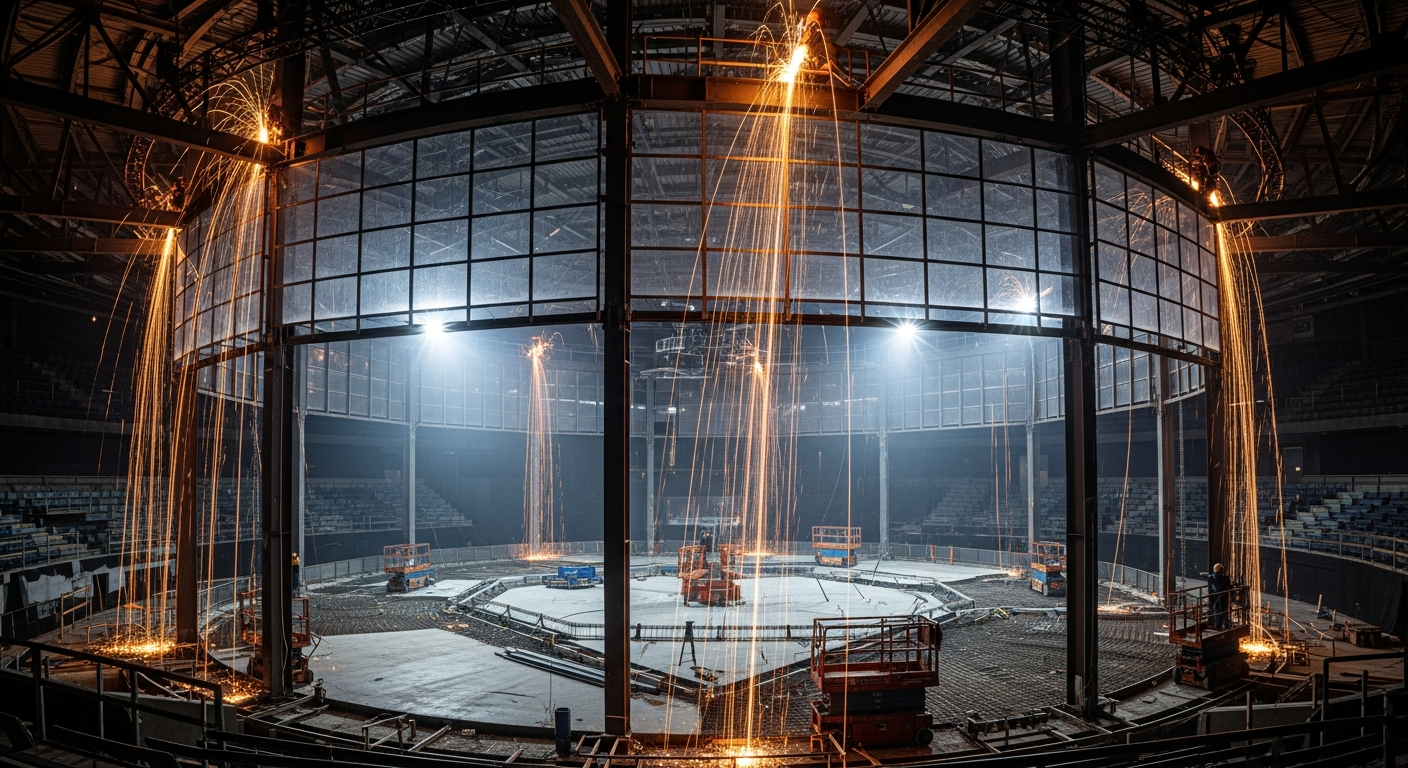
DRL races happen on circuits built inside large enclosed spaces — the controlled environment is partly a production choice (lighting is consistent, safety containment is manageable) and partly a practical necessity for running tight courses at those speeds.
Pilots race in first-person view using goggles that receive a live video feed from a camera mounted on the drone's nose. The feed is not processed or compressed — it is a direct analog signal to minimize latency. Any delay between what the camera sees and what the pilot sees translates directly to crashes.
The courses are built with large foam-padded gates, LED lighting for on-broadcast visibility, and obstacles designed to test specific skills: tight turns, elevation changes, split-second reaction windows. A full lap at professional speed takes between 20 and 40 seconds depending on course length.
The Physics of the Problem
Flying an FPV drone at 90 mph through a 3-foot gate requires processing a sequence of decisions in fractions of a second. The human reaction time limit is around 200-250 milliseconds. At 90 mph, the drone covers roughly 40 feet in that window.
Pilots describe flying at those speeds as less about reaction and more about anticipation — you commit to a line through a section of course before you can fully see it, trusting muscle memory and spatial awareness built through thousands of hours of flight time. The best DRL pilots typically began flying as teenagers and accumulate 20-plus hours of stick time per week.
Where the Sport Stands
The DRL has a genuine broadcast deal, genuine sponsorships, and genuine prize money — winners at top-tier events take home six-figure sums. The question of whether drone racing can grow into a major spectator sport remains open. The challenge is that the perspective that makes it thrilling to pilot — the first-person view — is not naturally compelling to watch from the outside. Solving that production problem is the league's main challenge for the next several years.