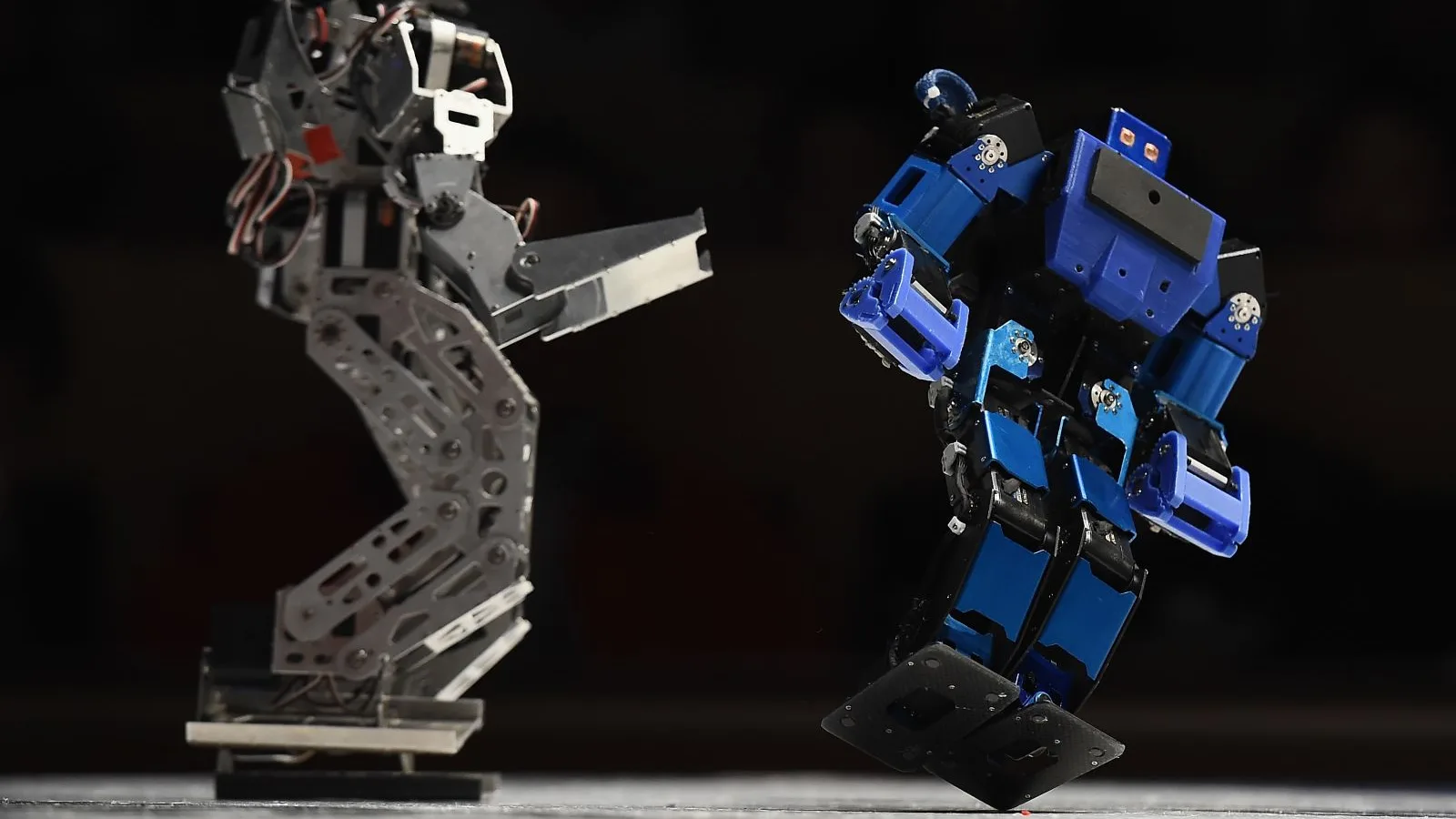
RoboMaster, Robot Football, and the Rise of Combat-Style Robotics Competitions
While humanoid sprinting grabs headlines, combat robotics has been quietly building a massive following — and producing engineers who now power humanoid leagues, drone racing, and RoboCup alike.
By Riley Cross · April 10, 2026 · 6 min read · robot-athletes
While humanoid sprinting and football grab headlines, an entirely different strand of robot competition has been quietly building a massive following: combat and combat-adjacent robotics, where engineering precision matters as much as raw aggression.
What Is RoboMaster?
DJI's RoboMaster series began as an annual international university robotics competition, pitting teams against each other in fast-paced, arena-based combat using custom-built robots armed with foam-pellet launchers and defensive armour systems. It's become one of the most technically demanding student robotics competitions in the world, requiring participants to master mechanical design, embedded systems, computer vision, and real-time strategy simultaneously.
Unlike BattleBots — where a single destructive hit can end a match — RoboMaster battles require sustained teamwork, tactical positioning, and adaptive strategy under pressure. Teams field multiple robots with different roles, making it closer in complexity to a real-time strategy game than a traditional combat sport.
From Competition to Consumer
The consumer spinoff has made the underlying technology accessible far beyond university labs. The RoboMaster S1 brings genuine engineering concepts — servo control, obstacle avoidance, remote programming — into a sleek, professional-feeling package. It's controllable via smartphone app or handheld remote, can be operated offline, and is frequently recommended in buying guides as one of the best programmable robot kits for older teens and adults who want to move beyond toy-grade hardware.
The Engineering Philosophy
What makes combat and competitive robotics distinct from humanoid sports is the underlying engineering philosophy. Where humanoid robotics chases human-like movement and locomotion, combat robotics optimises for speed, durability, and tactical control under pressure — closer in spirit to motorsport engineering than to athletics.
This isn't a narrow specialism. The real-time control systems, embedded engineering skills, and precision sensor work required for high-level RoboMaster competition are directly transferable to other advanced robotics fields.
A Talent Pipeline
As university-level robotics competitions like RoboMaster continue to grow, expect crossover with other robot sport categories to increase. Teams trained in real-time control systems and embedded engineering for combat robotics are exactly the talent pool now feeding humanoid sports leagues, drone racing autonomy stacks, and RoboCup football teams alike.
The sport produces engineers who understand how machines fail under competitive pressure — and how to build ones that don't.
FAQs
Is RoboMaster combat robotics dangerous to operate? Competitions are run under strict safety protocols, with protective barriers and standardised, low-impact projectile systems specifically designed to prevent injury to participants and spectators.
Can I buy a RoboMaster robot as a hobbyist, or is it competition-only? Yes — DJI sells consumer versions like the RoboMaster S1, designed for hobbyists, students, and STEM education, separate from the university-level competitive circuit.
What skills does competitive combat robotics actually teach? Participants typically develop skills in mechanical design, embedded systems programming, computer vision, and real-time strategic decision-making — skills directly transferable to other robotics fields.
How is combat robotics different from humanoid robot sports? Combat robotics prioritises speed, durability, and tactical engineering over human-like movement, whereas humanoid robot sports specifically aim to replicate human biomechanics and athleticism.