One in Three Fans Would Watch a Robot Sports League — So What's Stopping It?
A YouGov survey found that one in three US sports fans would watch a league made entirely of robot athletes. The appetite is there. Here's what the obstacles still are.
By RSW Editorial · November 10, 2025 · 7 min read · robot-athletes
Picture a prime-time match: two teams of humanoid robots — the Kyoto Crushers versus the Berlin Blitzers — face off in a packed arena. Drone cameras track every movement. An AI commentator calls the action in real time. Streaming audiences tune in from fifty countries.
Science fiction? Not as far away as you might think — and consumer appetite may already be there.
The Demand Signal
A YouGov survey conducted in July 2025 found that one in three US sports fans said they'd have at least some interest in watching a league made up entirely of robot athletes. Among younger fans, the numbers are even more striking: 40% expressed interest in watching human athletes compete directly against robots in the same competition, rising to 57% among younger demographics.
These aren't fringe numbers. A one-in-three interest rate from a cold-start concept — with no existing league, no star athletes, and no broadcast deal — would be considered a serious commercial signal in any other entertainment category.
The Infrastructure Already Exists
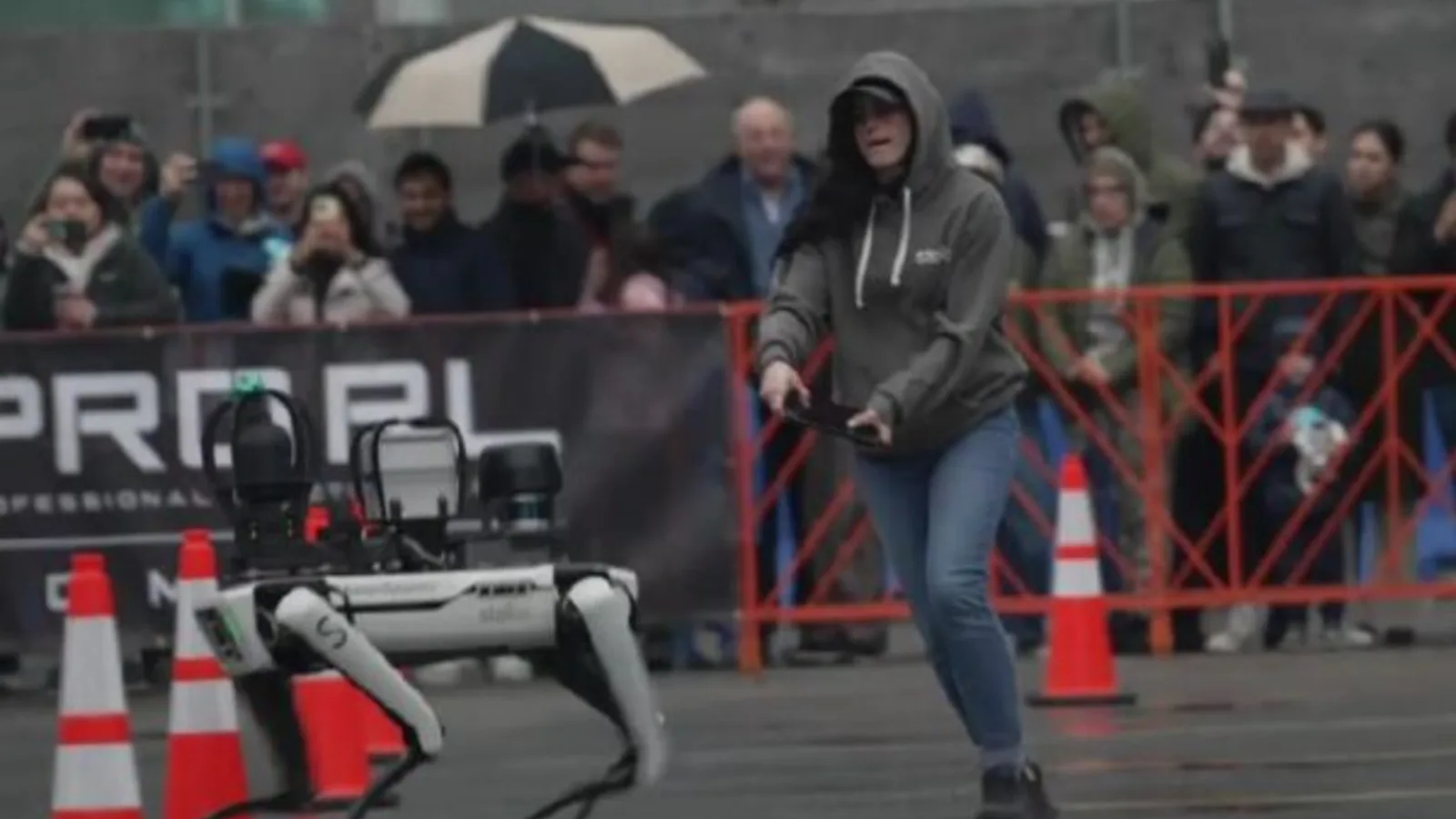
The competitive framework for robot sport is not hypothetical. RoboCup has been running since 1997 and now encompasses dozens of disciplines across multiple robot form factors. The inaugural World Humanoid Robot Games in Beijing drew 280 teams from 16 countries. VEX Robotics — named by Guinness World Records as the largest robotics competition in the world — runs leagues for students from elementary school through university, with more than 20,000 teams across 50 countries.
Competitive robot sport already has rules, referees, sponsors, and international governing bodies. What it doesn't yet have is a commercially structured prime-time broadcast product aimed at general sports fans rather than robotics enthusiasts.
The Real Obstacles
There are genuine barriers between where we are and a fully commercial robot sports league.
Reliability: The machines still fall over unpredictably. A sport that delivers frequent crashes, stalls, and technical failures is a hard product to sell to a casual audience expecting professional-level spectacle. The robotics industry is well aware of this; reducing failure rates in dynamic, uncontrolled environments is one of the core engineering challenges of the field.
Pace and drama: Matches in the humanoid football leagues can feel slow compared to human sport. Current robots don't yet replicate the explosive pace, decisive skill moments, and momentum swings that generate emotional investment in live sport.
Fan connection: The parasocial connection between fans and athletes — the years of following a career, the personality, the story arc — is harder to manufacture when the competitor is a machine. Robot teams can have identities and narratives built around them, but it requires a different approach to storytelling than traditional sport broadcasting.
The Hybrid Bridge
Survey data suggests fans are most engaged when the human-machine dynamic creates drama: can a robot outrun, outmanoeuvre, or outsmart a human being? If the Beijing half-marathon — where a robot smashed the human world record against flesh-and-blood competitors — is any indication, that drama is already writing itself naturally.
The hybrid format may be the near-term bridge: events where robots and humans compete in the same space, under the same rules, with the comparison itself as the main attraction. As machine performance continues to improve and reliability increases, the transition to fully autonomous robot leagues becomes a more manageable creative and commercial challenge.
The question isn't whether robot sports leagues will exist. It's how long before they sell out arenas.