Telemetry in the Arena: Turning Robot Logs into Better Pit Decisions
CAN-bus data and onboard logging can help explain combat robot failures. Here is a practical, rules-aware approach that does not depend on an uninterrupted cloud link.
By Riley Cross · September 24, 2026 · 3 min read · combat-robotics
After a fight, a team needs to know why a machine stopped behaving as expected. A burnt component is evidence, but it may not identify the first fault in the chain.
Onboard logging can provide the missing timeline. A voltage drop, controller fault or rising temperature recorded before a loss of movement can help a pit crew decide where to investigate.
That connects directly with the repeat-fight maintenance problem in our BattleBots Pro League strategy guide. Better data can shorten diagnosis, but only if it is reliable and interpreted in context.
Begin with a question
Useful telemetry is designed around decisions. If the question is whether a drive controller is overheating, record the relevant temperature, commanded drive activity and fault flags. If the concern is a power interruption, record voltage and the state of the system around the interruption.
Collecting every available signal can consume storage and processing time without improving diagnosis. A small, well-understood set of measurements is often more useful than a dashboard full of poorly documented numbers.
CAN is not a wireless link
A Controller Area Network can let onboard devices exchange messages. It does not, by itself, send data through the arena or into a cloud service.
A logger can record bus messages locally. Sending them elsewhere requires a separate communications path, with its own radio, reliability and regulatory considerations. These layers should not be conflated.
Local recording also preserves evidence when a wireless link is unavailable. In a metal enclosure surrounded by electrical noise and moving equipment, uninterrupted streaming should never be assumed.
Timestamp quality determines diagnostic value
A fault investigation needs to establish what happened first. Signals collected by different devices may use different clocks or update intervals. Without alignment, a dashboard can suggest a causal sequence that never occurred.
Record the sampling interval, timestamp convention and any gaps. A dropped data segment should appear as missing information, not as a misleading flat line.
Sensors also need appropriate ranges. An accelerometer that saturates during an impact cannot measure the full impact accurately. A temperature sensor mounted away from a winding does not directly report the winding's temperature.
A sensible component checklist
- Acquisition: supported controller messages or appropriately rated sensors.
- Logging: local storage with a documented data format.
- Timing: a clear clock and synchronisation method.
- Protection: mounting and wiring that remain safe under vibration and impact.
- Analysis: plots tied to configuration, match and inspection records.
- Communications: an organiser-approved radio arrangement, if wireless telemetry is permitted.
This is a functional checklist rather than a claim that every team uses a specific microcontroller, cloud provider or sampling rate.
Cloud analysis can help after collection
Offboard analysis can compare repeated runs or identify unusual patterns. But an anomaly flag is a prompt to investigate, not proof that a part is damaged.
A sponsorship announcement also does not establish that a league's robots stream live diagnostic data through that sponsor's infrastructure. Such a deployment requires its own evidence.
The practical priority is dependable collection and a repeatable inspection process. Cloud tools become useful after those foundations exist.
Reporting basis
This is a general systems-design explainer, not a report of a verified league-wide telemetry deployment. Teams should check the BattleBots rules and design documents and obtain approval for any communications arrangement. No live radio channel should compromise control or safety.
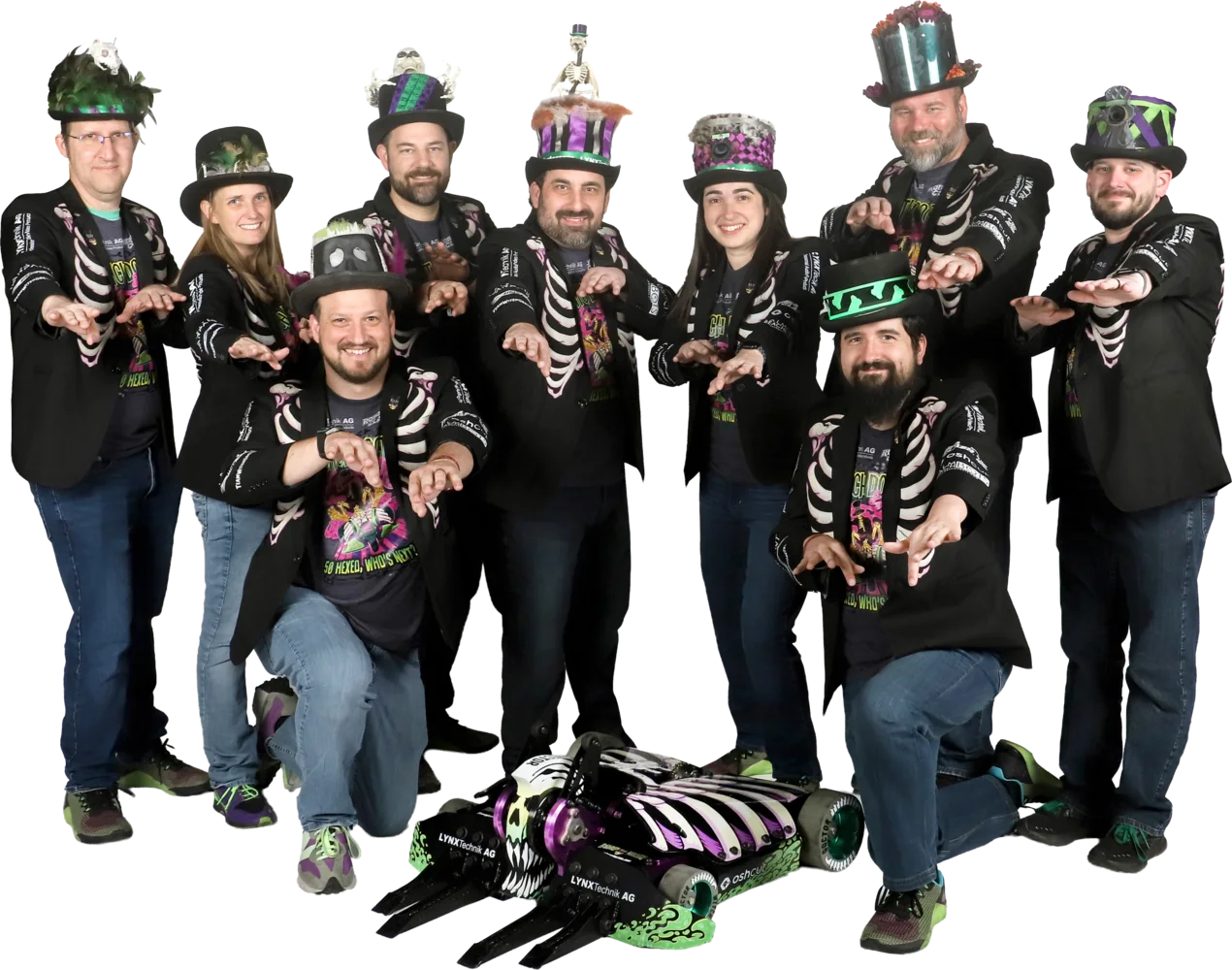
Cover photograph: Team Witch Doctor with its robot, BattleBots Pro League 2026; illustrative team photograph, not a live telemetry installation.