What Is Drone Racing? A Beginner's Guide to the Sport Built for the FPV Generation
Formula 1 reimagined for a warehouse — custom-built quadcopters, first-person-view goggles, 90 mph speeds, and an AI revolution already underway. Here's everything you need to know.
By Sam Nakamura · October 15, 2025 · 7 min read · fpv-racing
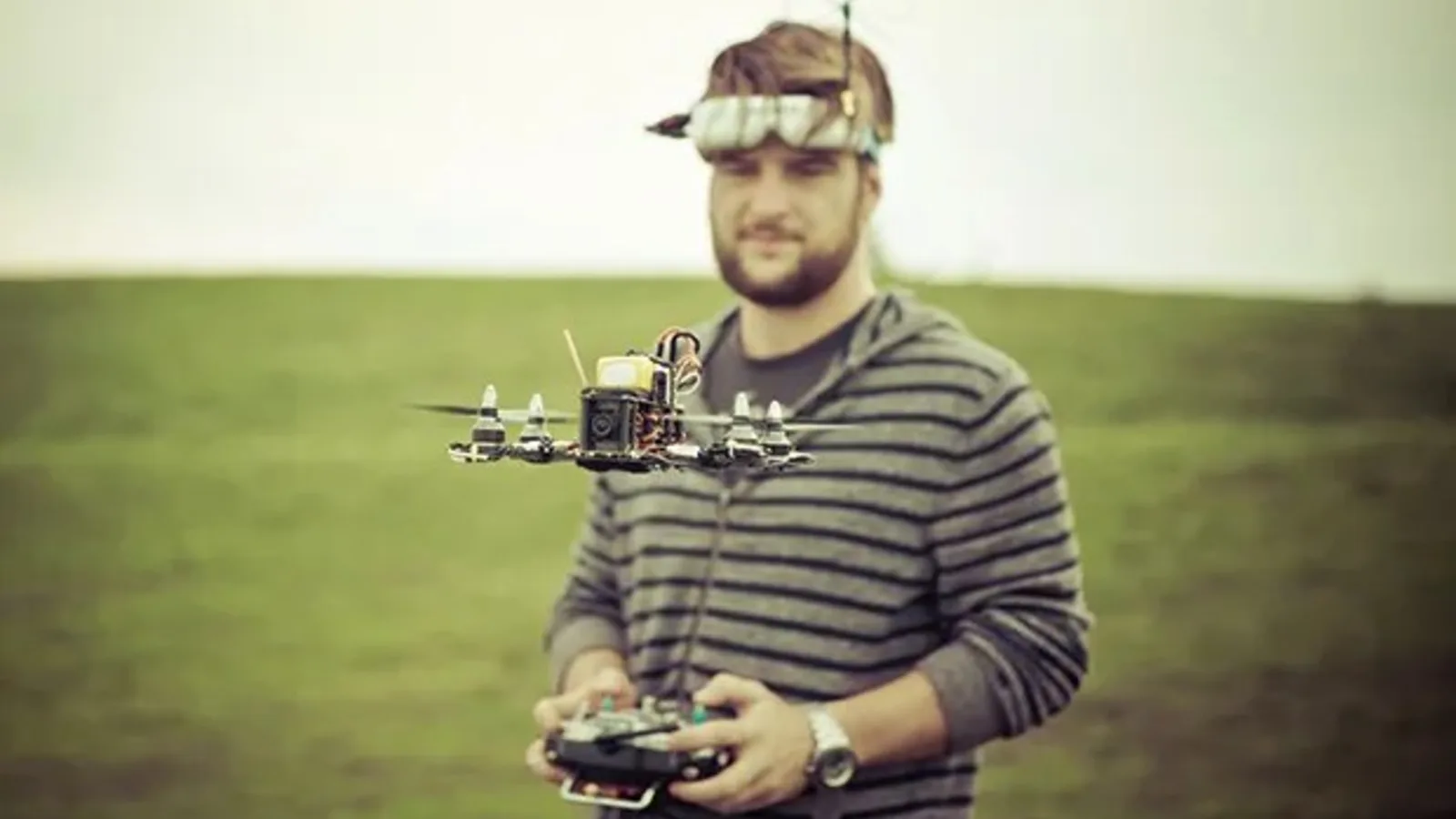
If you've never watched drone racing, the easiest way to picture it is Formula 1 reimagined for a warehouse — pilots flying custom-built quadcopters through tight 3D courses at speeds up to 90 miles per hour, wearing first-person-view (FPV) goggles that put them directly in the cockpit.
How FPV Drone Racing Actually Works
Pilots control small, lightweight racing drones via radio transmitter while watching a live video feed streamed from a camera mounted on the drone itself. There's no looking up at the sky to track your aircraft — pilots see exactly what the drone sees, in real time, which is what makes the sport so immersive (and disorienting) to newcomers.
The physical sensation of flying in FPV is difficult to describe until you've tried it. At racing speeds, through gates and around obstacles designed to leave almost no margin for error, the cognitive load is intense. Elite pilots develop a spatial intuition that looks almost instinctual from the outside, but is the product of thousands of hours in simulators and on real courses.
Who Organises Drone Racing Competitions?
The Drone Racing League (DRL), founded in 2015, is the most recognisable professional circuit, broadcasting races on networks including NBC Sports, Sky Sports, and FOX Sports Asia. Beyond DRL, MultiGP runs the world's largest grassroots drone racing community, with hundreds of chapters across the US and internationally, culminating in its annual International Open. The Drone Champions League (DCL) takes a different approach entirely, blending real-world locations with "Digital Twin" mixed-reality technology, and even runs its own simulation video game on PC and console.
Each organisation represents a different entry point into the sport — from polished broadcast entertainment (DRL) to community-driven local racing (MultiGP) to tech-forward hybrid experiences (DCL).
Where AI Fits in Now
Increasingly, drone racing isn't just about human pilots. Events like the A2RL Drone Championship in Abu Dhabi now test fully autonomous AI-piloted drones, sometimes racing directly against elite human FPV pilots. It's quickly becoming one of the clearest real-world demonstrations of how close autonomous systems are to matching elite human reaction speed and spatial judgment.
In January 2026, the A2RL Championship saw AI drones completing a tight indoor course in just over 12 seconds — with only a single onboard camera and no external processing assistance. The results have prompted serious debate about whether the near-term future of the sport will be human, machine, or some hybrid format that showcases both simultaneously.
What Does It Cost to Get Started?
Entry-level FPV drone kits, goggles, and a controller can run anywhere from a few hundred dollars for a beginner setup to several thousand for race-spec hardware. Many newcomers start with simulator software before risking a real crash — both DRL and DCL offer simulation games specifically for this purpose. Starting in a simulator is strongly recommended: it's free to crash, and the muscle memory transfers directly to flying real hardware.
Is Drone Racing Dangerous?
Crashes are common and expected — it's part of the sport's culture, not a failure state. Races typically happen in controlled environments (warehouses, dedicated tracks, or fenced outdoor courses) specifically to keep spectators safe from fast-moving hardware.
FAQs
Do I need a license to fly a racing drone? Requirements vary by country, but in many regions, drones above a certain weight threshold require registration with the national aviation authority, and competitive racing events typically operate under additional safety waivers.
How fast do racing drones actually go? Professional FPV racing drones can reach speeds of roughly 90 miles per hour (145 km/h) in competition settings, though top speeds vary depending on drone weight, motor power, and course design.
What's the difference between DRL, MultiGP, and DCL? DRL is a polished, broadcast-focused professional league; MultiGP is the largest grassroots/community racing organisation with local chapters worldwide; and DCL blends real-world racing with mixed-reality digital elements and its own video game.
Can beginners compete, or is it pro-only? Beginners are very welcome — most racing communities, especially MultiGP's local chapters, are explicitly built around newcomers progressing from local meetups to regional and international events.